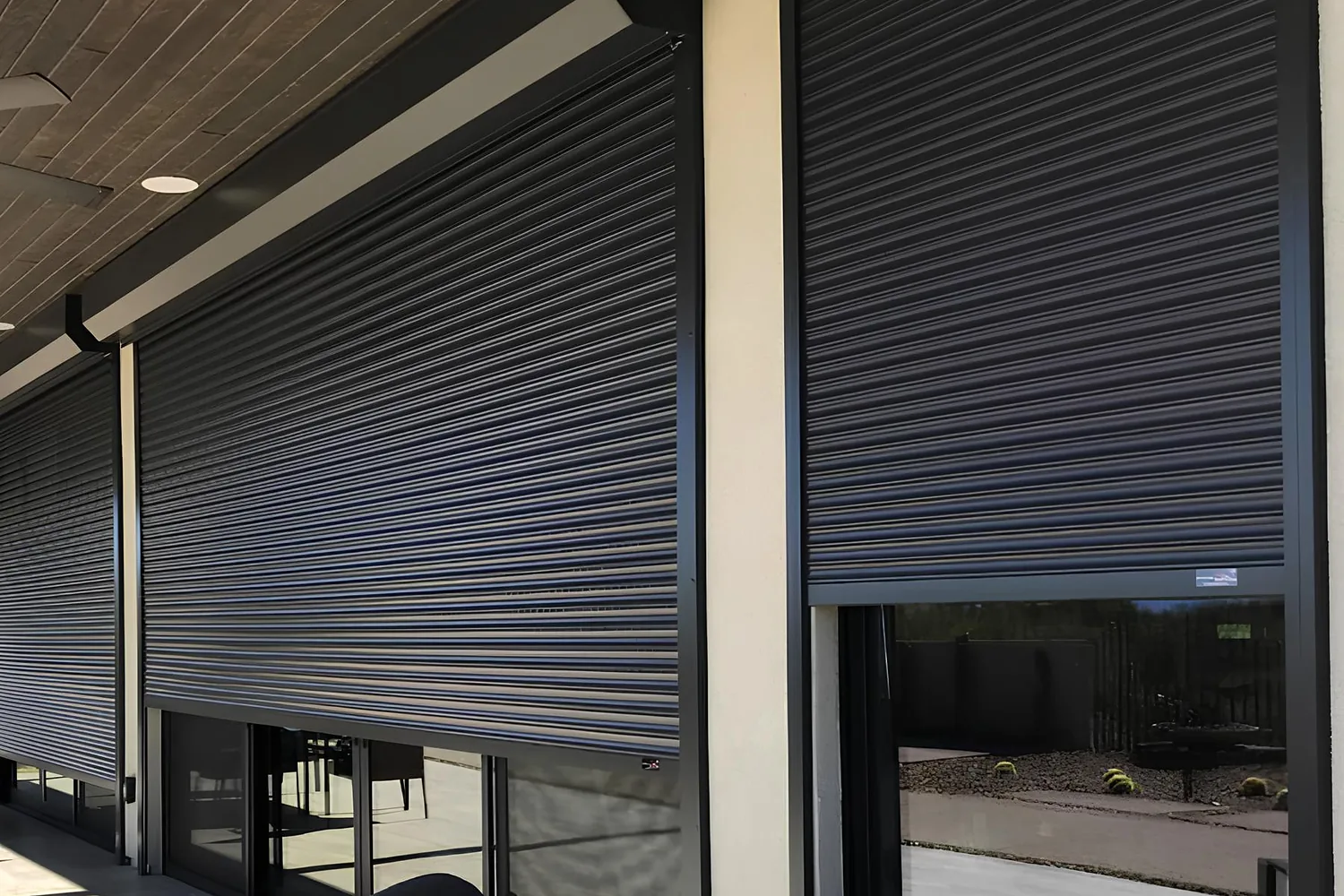
Roll up a patio screen and the mesh disappears into its housing. The side rails stay right where they are, taking the afternoon sun, the dust that settles on the patio, and the rain that blows in under the roof. Rolling shutters have exposed hardware, too. A powder-coated finish gives aluminum parts their color and helps protect them from everyday outdoor exposure. Knowing which parts have that finish makes it easier to compare options and care for what you install.
Powder coating starts with a dry material. At the factory, the aluminum is cleaned and prepared so the coating can adhere to the surface. An electrostatic spray gives the powder particles a charge that helps them cling to the metal. The part then goes into an oven, where the powder melts, flows across the surface, and cures into a continuous finish.
Liquid paint is applied wet and forms a film as it dries or cures. The practical difference is how the finish goes onto the part and how it sets. With powder coating, the dry particles are applied first and oven heat forms the finished layer. Once cured, that layer provides both the color you see and a barrier between the aluminum and its surroundings.
How well either finish holds up outdoors depends on the material, the preparation, and the coating itself. With a powder coat, the formulation and cure matter as much as the way the powder is applied. A smooth surface can tell you how the finish looks on installation day. For hardware that will stay outside, you also want a coating formulated to handle repeated exposure to sunlight and moisture.
Our exterior solar screens use housings and side rails made from extruded, American-made T6061 aluminum. The parts are powder coated at a U.S. manufacturing facility. Extrusion describes how the aluminum is shaped into parts with a consistent profile. The powder coat is applied to the surface of those parts as a separate finishing step.
The housing holds the rolled-up mesh at the top of the opening, and the side rails guide the screen as it moves. When you use the remote control to raise a motorized screen, the housing and rails stay in place. That’s why the hardware finish matters even on a patio where you leave the screen open most of the time. From the yard, the rails may read as two narrow strips along the posts. From your seat on the patio, you may notice the housing overhead.
We offer 10 standard hardware colors, from white and cream to bronze and black, and custom powder coating is available for the housing and rails. If your posts or trim already have a finish you want to coordinate with, tell us which surface you want the hardware to match. The mesh has its own color and openness options, so you can decide how much visibility you want through the screen and how you want the fixed aluminum parts to look.
When a rolling shutter closes over a window or door, its interlocking aluminum slats form a panel, sometimes called the curtain. You may also hear these systems called roller shutters. The panel is the largest visible surface when the shutter is down. When the shutter is up, the side rails and housing are the parts you’re more likely to notice.
If you’re comparing powder-coated rolling shutters, ask which components are specified with that finish. Where a slat is powder coated, the coating covers the exposed aluminum surface. Our standard slats contain dense foam for insulation, and heavy-duty extruded slats are available for applications that call for added strength and security. The type of slat is a separate specification from its surface finish.
When we discuss rolling shutters for your home, we can check the finish for the specific slats, housing, and rails you’re considering. That matters especially if you’re installing a shutter beside a solar screen. The two systems may share a post or sit against the same trim, so review the hardware on each one. If you’re still deciding how the parts should look together, our guide to color and finish options for rolling shutters covers how to coordinate them.
A rail on a west-facing patio can spend hours in direct sun even if the seating area is shaded. An exterior powder coat is formulated to resist weathering, including fading from sun exposure. The location still matters. One rail may sit beneath a deep roof while the other catches afternoon sun. If you’re comparing how the finish looks over time, start by looking at how much direct exposure each part gets.
The same principle applies to a rolling shutter. The housing and rails stay outside as you open and close it, while the slats spend part of their time rolled up. On a shutter you leave down for long periods, more of the curtain is exposed to the sun. Think through how you’ll use the system when you’re deciding which surfaces to pay attention to during cleaning and inspection.
A cured powder coat helps resist corrosion by providing a protective layer over the metal. After a storm, look where wind-driven rain and dirt tend to collect, such as the lower ends of the rails or the edges of the housing. A splash mark may wipe away with a damp cloth. Loose grit is best lifted off before you wipe the surface with soap and water because dragging particles across it can leave scratches.
Powder coating also helps resist everyday chipping, though debris can still leave a mark. If a branch hits a shutter rail or housing, check the surface and look for any change in the way the part sits. A mark on the coating and a guide that has shifted call for different responses. Wind and impact performance depend on the system, the size of the opening, and how the parts are installed. If a rail looks bent or the system starts catching, ask us to inspect it before operating it again.
Start with a soft, clean cloth on the exposed aluminum. For rolling shutter guides, use a soft brush to lift out loose dirt and debris. Pay particular attention to the lower parts of the guides, where you’re likely to see grit that has worked its way down from above. Removing it first helps keep you from rubbing abrasive particles against the finish.
If you clean both systems on the same day, check the cloth as you go. A cloth you’ve just used on a dusty patio rail can carry grit onto a shutter slat. Shake it out or switch to a clean section before moving to the next surface. Use gentle pressure, especially when wiping across the interlocking shutter slats.
Mix a little mild detergent with water and use a soft cloth to wipe the slats or accessible metal surfaces. Follow with a clean cloth dampened with plain water to remove soap residue. Dry the cleaned areas with a soft microfiber cloth. On rolling shutters, let the guides dry fully before using the shutters again.
For solar screens, treat the aluminum hardware and mesh as separate surfaces. You can wipe down the exposed housing and rails with a soft, damp cloth. Follow the care instructions for your screen fabric if the mesh needs cleaning as well. Avoid abrasive pads and harsh cleaners on the finish. If a mark remains after gentle cleaning, check with us before trying a stronger product.
If you see a mark after a storm or after moving furniture past a rail, clean it gently and look at it in daylight. A dirty streak may disappear once it’s wiped away, while a chip can leave a small spot of aluminum visible. Take a clear photo of the spot and a wider one that shows which part it’s on. That gives us enough context to discuss touch-up options for that finish.
Notice whether a mark returns in the same place after the screen or shutter moves. A scratch that keeps appearing along a guide is worth pointing out, especially if the unit has started to catch as it opens or closes. Tell us where it happens and what you see. Those details help us determine whether the issue is on the surface or involves the moving parts.
If your project includes several openings, make a list of the parts that will stay visible. For a screen between patio posts, that means the housing and both rails. For a shutter over a front window, include the slats if you plan to lower the shutter most evenings. This gives you a concrete list of surfaces to review when you’re choosing which finish to order.
Look at a physical sample next to the surface it will sit against. A white sample held against a white patio post can reveal a difference that’s hard to see on a phone. Check the sample in daylight and under the patio roof if the hardware will sit in shade. If you’re using a custom color on the screen hardware, bring the trim sample or finish reference you want us to work with.
Think about cleaning access, too. The face of a rail beside a patio door may be easy to reach, while a housing above a wide opening may be well overhead. Ask us which surfaces you can care for yourself and what to do if you notice a damaged area somewhere you can’t reach comfortably.
Tell us which windows, doors, or patio openings you want to cover and which ones get the most afternoon sun or wind-driven rain. During your free estimate, the Blinds Brothers team will measure each opening, walk you through finish options for the visible hardware, and explain how to care for the system you choose.