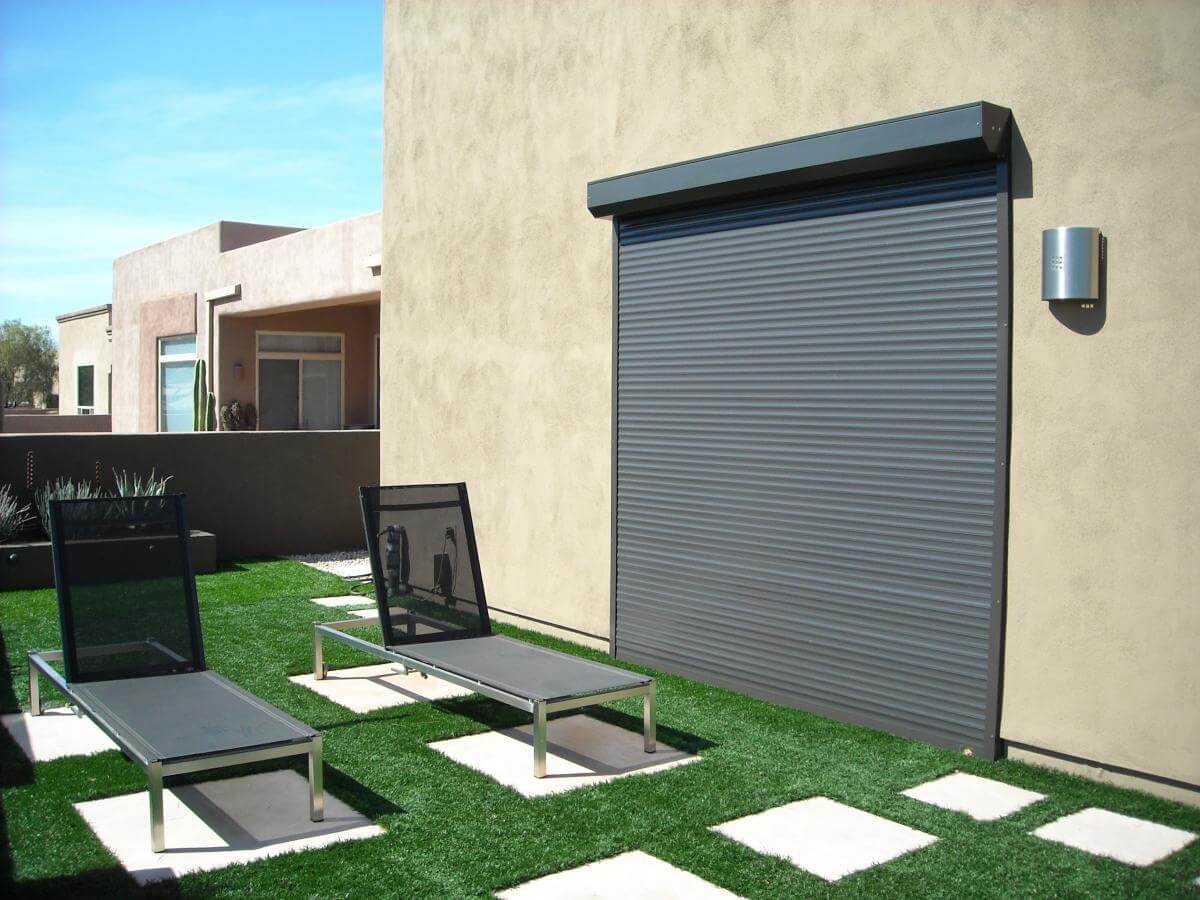
If you're wondering how to pick shutter colors, start with the parts of your home's exterior that are hardest to change: the brick or stone, roof color, window trim, siding, and other permanent finishes. The right shutter color should complement those elements rather than compete with them.
This matters even more with rolling shutters because the housing and side rails remain visible when the shutters are open. The goal is to choose a finish that looks intentional as part of your home's entire exterior design, whether you want the system to blend in or provide a stronger contrast.
For Dallas-Fort Worth homeowners considering rolling shutters, Blinds Brothers offers six standard slat colors: white, cream, light beige, light gray, dark beige, and bronze. Those warm neutrals and earth tones work with many of the brick, stone, stucco, and siding combinations found throughout North Texas.
If you came here looking for information on decorative shutters such as black shutters, navy blue shutters, red shutters, or green shutters, we'll cover those too. They're popular exterior shutter colors in the broader decorative-shutter market, but they are different from the functional rolling shutters Blinds Brothers installs.
Blinds Brothers’ rolling shutters come in six standard slat colors designed to coordinate with most exterior color palettes:
White shutters provide the cleanest option for homes with white trim, light window frames, or other crisp exterior details.
White is one of the classic colors associated with traditional architecture. On the right house, it can give the shutter system a fresh, understated appearance rather than making it a focal point.
White shutters can also provide strong contrast against darker brick or siding. On white houses or white siding, however, the exact undertones matter. If every exterior surface is nearly the same shade of white, the shutters can disappear visually.
Cream is warmer than bright white and works well with beige brick, limestone, warm stucco, and other natural tones.
It’s a useful choice when white feels too sharp against the home’s exterior color palette. Cream can also provide enough separation from beige siding or tan siding to keep the shutters visible without creating a striking contrast.
Light beige works naturally with stone, stucco, tan siding, and many North Texas brick exteriors.
It is one of the easiest shutter colors to use when the goal is to make the system feel like part of the house instead of a separate architectural feature.
Light gray provides a cooler neutral that works especially well with modern exterior design, gray brick, cool-toned stone, or dark gray architectural elements.
Gray shutters are also a useful middle ground when white is too bright and bronze feels too dark.
Dark beige works with warmer brick homes, tan siding, brown roofing, and other earthy tones.
If the home already has several warm neutrals, dark beige can add definition while staying inside the existing exterior palette.
Bronze is the darkest standard option and creates the strongest contrast of the six.
It can work particularly well on homes with dark trim, dark window frames, black accents, darker roofing, or deep hues in the brick or stone. Bronze is also the closest standard rolling-shutter option for homeowners who like the visual effect of black shutters but want the functional system Blinds Brothers installs.
You can compare finished installations and different exterior combinations in the inspiration gallery.
The best shutter colors rarely come from picking a favorite color in isolation.
Instead, look at your house as one complete color scheme.
Paint can change. Brick, stone, roofing, and major exterior materials usually stay much longer.
Before choosing an exterior shutter color, stand back from the house and identify:
Then decide whether the shutters should match, blend, or contrast.
That simple framework makes choosing shutter colors much easier.
Matching the housing and rails to the window trim is one of the safest approaches.
It helps the rolling shutter read as part of the window instead of something added on later. This can create architectural harmony without drawing unnecessary attention to the system.
White shutters with white trim are the obvious example, but the same strategy works with cream, beige, gray, or bronze.
If you want the shutters to perform their job without becoming a major design feature, this is usually a strong starting point.
You can also choose shutter colors that sit close to the home's main exterior color.
This works particularly well with large windows or patio openings because a rolling shutter becomes a substantial block of color when it is fully lowered.
A light beige shutter against limestone, for instance, feels softer than placing a much darker color across the same opening.
The challenge is getting the undertone right. A beige that leans yellow can look wrong against a cooler beige brick, even though both colors technically fall in the same family.
That is why physical color swatches are more valuable than trying to match from a photo.
Darker shutters against a light exterior can frame windows and make the shutter system part of the architectural design.
Bronze against light stone, cream brick, or beige siding is one example. White against darker brick can create the opposite effect.
Strong contrast works best when the darker or lighter shutter color connects to something else on the house. It might repeat the roof color, window frames, front door, exterior lights, or other accents.
Without that connection, a high-contrast shutter can look isolated.
The goal is visual balance, not simply choosing the darkest color available.
There is no single exterior shutter color that works for every house, but the surrounding materials can narrow the choice quickly.
For beige siding, cream and light beige create a soft, cohesive look. Dark beige provides more definition while staying within the same family of warm neutrals.
Bronze is useful when you want a more noticeable contrast.
Tan shutters against tan siding can work, but be careful about getting too close without actually matching. Two nearly identical earth tones can sometimes look more accidental than intentional.
White houses are flexible because both light and dark colors can work.
White shutters can provide a clean look when they coordinate with white trim. Light gray shutters add subtle separation. Bronze creates a much stronger contrast and can frame windows effectively, especially when the house already includes dark trim or black accents.
Across decorative exterior shutters, black shutters are one of the most popular color choices because they create a classic high-contrast look against white siding.
Blinds Brothers does not offer black as one of its six standard rolling-shutter slat colors, so homeowners who like that appearance will usually look at bronze as the darker alternative.
Red brick already contains a lot of visual variation, so the shutter color usually works best when it relates to an undertone already in the brick.
Cream and dark beige can complement warmer red brick without competing with it. Bronze can also work well on brick homes when the roof, window frames, or other details are dark.
Bright red shutters or dark red shutters against red brick can create too much competition unless the colors are chosen very carefully.
Light gray can create a coordinated appearance on lighter gray homes, while bronze adds more definition.
If your house uses dark gray siding or masonry with black accents, bronze can tie into those darker exterior elements without requiring the rolling shutter itself to be black.
Gray shutters are popular in broader exterior design because gray can feel modern without abandoning the classic neutral look.
For green siding, cream, light beige, and dark beige usually work more naturally than another green.
Decorative deep green shutters, dark green shutters, forest green, and hunter green are popular with natural surroundings, brick, wood tones, and traditional homes. They can look especially appropriate on properties surrounded by mature landscaping.
Blinds Brothers’ rolling shutters are not offered in those green colors as standard options, so a warm beige or bronze can provide a similar connection to natural tones while remaining within the available finish range.
Blue siding tends to work well with crisp neutral shutter colors.
White and light gray can keep the exterior feeling fresh, while a very dark shutter can create considerably more contrast.
Navy blue shutters are also popular in the broader decorative-shutter market, especially with tan siding, stone, or white houses. Navy blue can provide more personality than black while still behaving like a classic neutral.
Again, navy blue shutters are not part of the standard Blinds Brothers rolling-shutter color range.
This is where it helps to distinguish decorative shutters from functional rolling shutters.
Someone researching shutter colors online will see combinations like:
Those combinations usually refer to decorative shutters such as louvered, raised-panel, or board-and-batten styles.
Decorative shutters can be painted almost any color because they remain fixed beside the window.
Rolling shutters have a different job. They are moving exterior systems made from aluminum slats that need to travel into a housing repeatedly. The available finishes are therefore more controlled.
If you love bold colors like navy blue, deep green, or red, one approach is to let the front door become the focal point and keep the rolling shutters neutral. Designers often use the front door and smaller exterior details for bold accent colors because they can provide personality without overwhelming the home's entire exterior design.
They do not have to match exactly, but they should relate to one another.
If you have a black front door and dark fixtures, a bronze rolling shutter can repeat that darker visual weight.
If the front door is a vibrant color like navy blue, dark red, or forest green, you do not necessarily need matching color shutters. A neutral shutter can allow that front door to remain the intentional focal point.
Think in terms of complementary colors and hierarchy rather than making every exterior element identical.
Architectural style is another useful filter when choosing shutter colors.
Traditional homes generally work well with classic colors and strong visual order.
White, cream, and darker neutral shutters can all make sense depending on the brick, trim, and roof.
In the decorative-shutter market, black shutters and dark green shutters are particularly common on traditional homes. For rolling shutters, bronze can provide similar visual weight.
Modern architecture usually benefits from a simpler exterior palette.
Light gray, bronze, white, and other restrained neutrals work well with clean lines and larger glass openings.
Too many competing accent colors can make a modern facade feel busier than intended.
Modern farmhouse homes often rely on white siding, black accents, and natural materials. White rolling shutters can blend with the trim, while bronze can connect visually with darker windows or fixtures.
Cottage style homes may use more decorative shutter colors, including blue shutters, green shutters, or natural wood shutters. When functional rolling shutters are being added instead, the neutral finish should complement those architectural details rather than try to imitate them.
Craftsman architecture often uses brick, stone, wood, and natural tones.
Dark beige and bronze fit easily into those earth tones. If the home already has natural wood shutters or other crafted wood elements, choose a rolling-shutter finish that supports those materials instead of competing with them.
Cream, light beige, and other warm neutrals tend to work well with stucco, clay-colored roofing, stone, and warm exterior finishes.
The goal should be architectural harmony rather than sharp contrast unless the home already uses very dark window frames or trim.
Color matters even more when a shutter covers a large patio opening.
A shutter spanning several feet between posts or columns becomes a large visual surface when it is lowered. A color that looks subtle on one window may feel much stronger across an entire patio.
For that reason, blending usually works well for larger openings.
Think about the shutter color alongside the rest of your outdoor living space, including posts, patio structure, stone, outdoor shades, furniture, and other exterior finishes.
If you are combining rolling shutters and exterior shades, choosing complementary colors at the same time can make the finished space feel like one planned design rather than several unrelated additions.
For rolling shutters, color is primarily an exterior design decision.
The functional performance comes from the shutter construction, aluminum slats, insulation, fit, and operating system rather than whether you choose white, light gray, dark beige, or bronze.
That gives homeowners more freedom to choose the right shutter color for the house without worrying that a darker finish automatically means a hotter interior.
With fabric-based exterior shades, color and fabric construction play a different role, so those products should be selected based on their specific performance requirements as well as appearance.
The slats get most of the attention when homeowners compare shutter colors, but the housing and rails may matter even more visually.
When the rolling shutters are open, most of the slats disappear into the housing. The housing above the opening and rails along the sides remain visible.
That means you are really making two related color decisions:
Matching the housing and rails to the window trim can help the system recede into the exterior.
On a darker home, coordinating with the window frames or roof may create a more cohesive look.
Looking through completed projects can also help you see how different finishes read at full scale rather than judging a small sample by itself.
Color and controls are both selected before the shutters are ordered, so it makes sense to consider them together.
Motorized rolling shutters can be operated individually or grouped together, and compatible home automation can make it easier to schedule shutters around afternoon sun, privacy needs, or everyday routines.
The shutter finish affects how the system looks. The controls affect how likely you are to use it consistently. Both are part of designing a system around the way you actually live.
Many DFW neighborhoods have architectural standards for visible exterior changes.
Before ordering shutters, check whether your HOA requires approval for:
It is much easier to confirm those details before the shutters are manufactured than after installation.
A color viewed on a phone or computer is not the same color you will see outside your home.
Screen brightness, photography, shadows, and surrounding colors can all affect how a finish appears.
When possible, compare several color swatches directly against the brick, siding, stone, and window trim. Look at them in natural light and at different times of day.
A color that looks perfect at noon may pick up completely different undertones in late-afternoon sunlight.
You can compare physical samples and see working shutters at the Southlake showroom. Samples can also be evaluated against your home during a free in-home estimate.
Commercial projects involve many of the same color considerations, but consistency becomes even more important.
The rolling shutter finish may need to coordinate with:
For a multi-tenant property, keeping housings and rails consistent across multiple openings can matter more than making any one shutter stand out.
Blinds Brothers also installs commercial exterior shading and shutter systems throughout Dallas-Fort Worth.
The right exterior shutter color is not necessarily the trendiest one.
Black shutters may be extremely popular. Navy blue shutters may look beautiful against stone. Deep green can complement natural surroundings, and red shutters can create a bold focal point.
But those trends only matter if the product and color actually suit your house.
With functional rolling shutters, the better question is how the available finish fits with the brick, stone, roof, siding, trim, windows, and architectural style already there.
For Blinds Brothers’ rolling shutters, that means choosing among white, cream, light beige, light gray, dark beige, and bronze, then coordinating the housing and rails so the complete installation looks intentional.
To compare finishes on your own home, contact Blinds Brothers for a free estimate and see the samples against your exterior in natural light.
The six standard shutter colors are white, cream, light beige, light gray, dark beige, and bronze. These neutral options are designed to coordinate with many common brick, stone, stucco, siding, trim, and roof colors.
Across exterior design generally, black shutters are among the most popular choices because they work with a wide range of house colors and provide strong contrast. White shutters are another classic choice, while navy blue, gray, and deep green are popular for specific home styles.
For Blinds Brothers’ rolling shutters specifically, the standard range is neutral, with bronze providing the darkest option.
Either can work. Matching the window trim helps the shutter system blend with the window, while choosing a color closer to the brick, stone, or siding helps it blend with the wall. A contrasting shutter color can also work when the same tone appears somewhere else on the exterior.
Cream, light beige, and dark beige all work naturally with beige siding. Bronze creates more contrast if the home also contains darker roofing, window frames, or exterior accents.
Warm neutrals such as cream and dark beige usually complement red brick well. Bronze can also work when the home has dark trim, roofing, or fixtures. Pay attention to the undertones in the brick before selecting a finish.
Black is not one of the six standard slat colors for Blinds Brothers’ rolling shutters. Bronze is the darkest standard choice and can create a similar darker accent on homes with black trim or other dark exterior elements.
Navy blue shutters, bright red shutters, dark red shutters, forest green shutters, and hunter green shutters are common in decorative exterior design, but they are not part of the standard rolling-shutter color range offered by Blinds Brothers.
The finish itself is not the primary factor controlling the performance of a rolling shutter. The construction, insulated slats, fit, and overall shutter system are much more important, so homeowners can focus primarily on choosing a finish that works with the exterior.
It does not need to match exactly. The colors should feel related within the overall exterior palette. If your front door uses a bold accent color, a neutral rolling shutter can actually help keep the door as the focal point.
Hold physical color swatches against your brick, stone, siding, or trim outdoors. Check them in natural light and, when possible, at more than one time of day. This gives you a much more accurate idea of the finished appearance than viewing colors on a screen.
No. In many installations, matching the housing and rails to the window trim creates the cleanest appearance even if the shutter slats use a slightly different color.
Yes. Rolling shutters become part of the visible exterior design, so color can influence the first impression of the home. A finish that complements the permanent exterior materials generally creates a more cohesive look than one selected in isolation.
.webp)