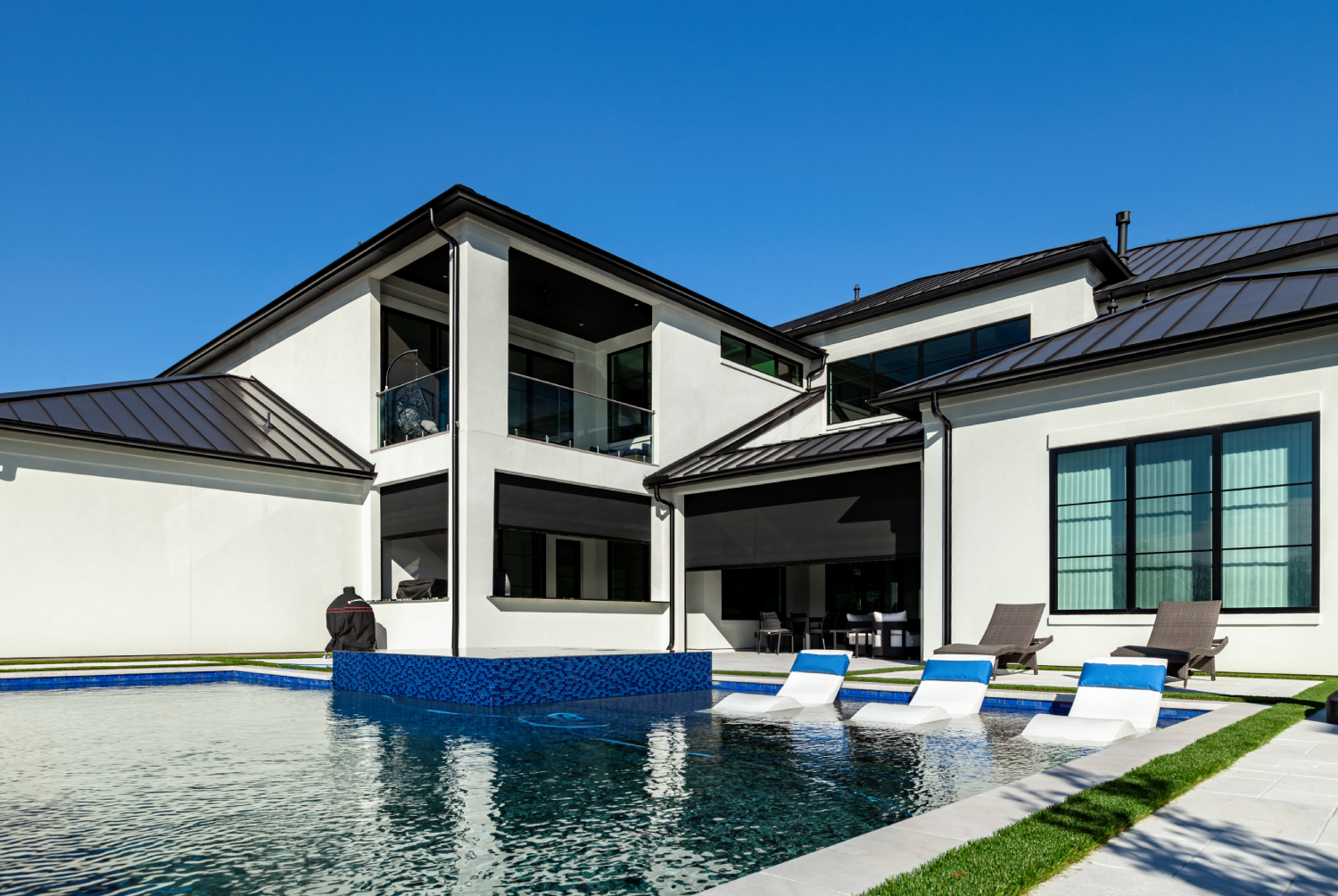
The main solar screen benefits are reduced solar heat gain, less glare, lower UV exposure, improved daytime privacy, better outdoor comfort, and less cooling demand from sun-exposed windows. Exterior solar screens can also preserve natural light and outward visibility while helping protect furniture, flooring, and other interior finishes from fading.
North Texas sun can affect almost every part of a home. It heats up west-facing rooms, reflects across televisions and computer screens, and can make covered patios uncomfortable long before the day is over. Because exterior solar screens sit outside the window glass, they can reduce some of that solar radiation before it reaches the glass and contributes to heat indoors.
For homeowners, that can mean more comfortable indoor temperatures, less glare, greater daytime privacy, reduced fading of furnishings, and potentially lower cooling demand. On patios and other outdoor areas, solar shades can also create more usable shade without completely separating you from the outside world.
Blinds Brothers installs custom exterior solar screens for windows, doors, patios, and other openings throughout Dallas-Fort Worth.
Exterior solar screens are retractable shades installed on the outside of windows, doors, patios, and other openings.
Blinds Brothers' systems use woven solar screen material that travels within an aluminum housing and rail system. When shade is needed, the screen lowers across the opening. When it is not, the fabric can roll back into the housing.
Many solar screen fabrics are made from materials such as PVC-coated polyester, although the exact construction depends on the product.
Solar window screens are also different from ordinary window screens or insect screens. Standard insect screens are primarily designed to keep bugs out while allowing air through. Solar screens use a tighter, purpose-built fabric to manage solar heat, UV rays, glare, privacy, and light.
Where the screen is installed is a major part of how it works. The science behind solar screens starts with intercepting the sun's rays before they reach the window.
For many DFW homeowners, heat is the reason they begin looking at solar shades in the first place.
Direct sunlight striking a window carries solar energy toward the glass. Once that energy reaches and passes through the window, some of it contributes to heat gain inside the room.
Exterior solar screens put shade in front of the window glass.
Instead of trying to manage all of the sun's heat after it is already inside, the screen reduces solar radiation earlier in the process. That can decrease the amount of heat transfer occurring through heavily exposed windows.
This is particularly useful for:
The amount of heat reduced by solar screens depends on the geographic location, window orientation, solar screen fabric, openness, surrounding shade, and the amount of direct sunlight hitting the opening.
A house does not always heat evenly.
One room may stay comfortable all morning and suddenly feel much warmer once the afternoon sun reaches its windows. That is especially common with large west-facing windows around Dallas-Fort Worth.
Reducing solar heat at those openings can help limit the temperature swing.
That can make a noticeable difference in:
Rather than treating every window the same way, homeowners can focus on the openings responsible for the most heat gain.
Custom solar screens for windows are especially useful when one side of the house gets significantly more sun than the rest.
Anything that reduces unwanted heat entering the home can affect how much cooling is needed to maintain a comfortable temperature.
That does not mean solar screens guarantee a specific percentage of energy savings. Cooling costs, energy consumption, and utility costs depend on far more than the window coverings alone.
Factors include:
However, limiting solar heat gain can reduce one source of cooling demand.
That can make exterior shading a smart choice for homeowners focused on energy efficiency, particularly when large windows receive several hours of strong direct sunlight.
Over time, reducing cooling demand may contribute to lower energy costs, but the actual savings will vary by property. Solar screen savings make the most sense when evaluated alongside comfort and the specific openings being covered rather than as one universal savings percentage.
Heat is not the only problem caused by afternoon sun.
Direct sunlight can create intense glare across:
Solar screens can reduce glare by filtering sunlight before it enters the room.
This can be particularly useful in a home office where west-facing windows make a computer screen difficult to see, or in a living room where afternoon sunlight reflects directly across the television.
The benefit is that you can control glare without necessarily eliminating all natural light.
A tighter solar screen fabric generally provides more glare reduction, while a more open fabric preserves more light and outward visibility.
Ultraviolet radiation can gradually damage the interior of a home.
Repeated exposure to harmful UV rays can contribute to:
Because the damage builds gradually, it may take a few years before it becomes obvious.
Solar screens can provide UV protection by reducing the amount of sunlight and UV radiation reaching the glass and entering the room.
The level of protection varies by solar screen material, so exact percentages should be tied to the specific fabric being installed.
For homeowners with expensive flooring, furniture, artwork, or furnishings near large windows, reducing UV exposure can be an important long-term benefit.
There is an easy way to see what years of sun can do.
Move a rug that has been sitting in front of a sunny window. Compare the back of the sofa with the side facing the glass. Look at flooring close to the window compared with an area several feet away.
UV damage can show up as uneven fading long before anything is physically worn out.
Exterior solar screens help protect interiors by limiting some of that daily exposure.
That does not completely eliminate fading, but reduced UV exposure can help slow the process and preserve the appearance of flooring, furniture, artwork, and other materials for longer.
Privacy usually comes with a trade-off.
Cover the window completely and nobody sees in, but you may not see out either.
Solar screens give homeowners another option.
During the day, the tightly woven fabric can make the interior more difficult to see from outside while still allowing outward visibility from inside.
That can improve privacy in:
At the same time, the screen still allows filtered natural light into the room.
The level of daytime privacy depends on the fabric openness, fabric color, and lighting conditions. Darker colors can sometimes improve the view looking outward while making the screen itself appear less visually prominent.
One important limitation is nighttime. When the inside of the house is brighter than outside, the privacy effect changes.
A major concern for many homeowners is losing the view.
They want relief from the sun, but they do not want a patio or living room to feel boxed in.
Solar screen fabric is designed to strike a balance between shade and outward visibility.
A more open screen can provide more light, airflow, and visibility. A tighter screen can provide stronger shade, glare control, and privacy.
That means the best fabric depends on where it is going.
A west-facing bedroom may benefit from a tighter screen than a covered patio overlooking a pool.
The goal is not simply blocking as much sunlight as possible. It is deciding how much heat, light, privacy, and visibility you want at each opening.
A covered patio can still become nearly unusable when afternoon sunlight enters from the side.
The roof blocks overhead sun, but it cannot stop low-angle light hitting the patio from the west.
Exterior solar shades can close that gap.
When lowered, they can provide:
When those conditions change, the screens can retract so the patio feels open again.
For homeowners who have invested in a patio, pergola, pool, or outdoor kitchen but rarely use it until sunset, that flexibility can make a substantial difference.
Solar screens are often a natural addition to a larger outdoor living project, particularly when the goal is creating open space that can be used during more parts of the day.
Solar screens can also provide a physical barrier across an outdoor opening.
That can help keep insects and some windblown debris away from covered patios and seating areas.
Different screen materials prioritize different benefits.
A tighter solar screen may prioritize shade, glare, and privacy, while an insect screen or more open mesh can prioritize airflow, outward visibility, and keeping bugs out.
Blinds Brothers offers a Tuff Insect Screen for homeowners whose main concern is insects rather than maximum solar protection.
For households with pets, screen durability may also be worth discussing. A heavier screen material may be more appropriate in areas where dogs or other pets regularly come into contact with the fabric, although no screen should automatically be treated as completely pet resistant.
Function is usually the main reason homeowners install exterior solar screens, but appearance still matters.
A custom system is designed around the opening rather than hanging loosely in front of it.
Housing and rail finishes can be coordinated with:
When solar screens are installed thoughtfully, the system can blend into the exterior rather than looking like an afterthought.
That may also appeal to potential buyers who value built-in shade, privacy, and outdoor-comfort features, although it is difficult to assign a universal increase in home value to the installation.
The difference comes down to location.
An interior blind operates after sunlight has reached the window.
An exterior solar screen sits outside the glass and can reduce a portion of that solar radiation before it reaches the window in the first place.
That is especially important for reducing heat.
Interior blinds can still be useful for room darkening, nighttime privacy, and interior design. But if direct solar heat and glare are the primary problems, exterior shading addresses them earlier in the process.
Blinds Brothers specializes in exterior solar screens and rolling shutters rather than interior window products.
Solar screens are not all the same.
The solar screen fabric determines much of the balance between heat control, shade, light, privacy, and visibility.
One of the most important characteristics is fabric openness.
A tighter weave generally provides:
A more open weave generally provides:
Fabric color can also influence appearance, glare, and visibility.
This is why the best screen material depends on the opening instead of choosing one fabric for the entire house.
Some openings receive much more benefit than others.
These are often the first place to consider solar screens because afternoon sun reaches them during some of the hottest hours of the day.
These can also receive significant direct sunlight and solar heat late in the day.
More glass means a larger area for sunlight to reach the interior.
Large glass doors can create significant heat and glare depending on their direction. Motorized solar screens for sliding glass doors provide shade without permanently covering the opening.
Exterior screens can create shade where direct sunlight enters from the sides of a covered space.
Retractable shade can make these spaces more comfortable while maintaining the open-air feel.
The benefits only happen when the screens are down at the right time.
That is where motorization becomes useful.
A homeowner might know that direct sunlight begins hitting a room at 2 p.m., but remembering to lower the screens every afternoon is another matter.
Blinds Brothers' motorized screens can be paired with compatible home automation for scheduling and easier control.
A screen can lower before the strongest afternoon sun reaches the window and retract later when shade is no longer needed.
That makes exterior solar shading more consistent without requiring someone to manually adjust every screen throughout the day.
Not necessarily.
A shaded north-facing window may receive relatively little direct solar heat. Installing the tightest screen there may provide less benefit than installing one over a large west-facing window that receives hours of afternoon sun.
The smartest approach is to evaluate the house opening by opening.
Consider:
That helps prioritize the areas where exterior shading will provide the most benefit.
For homeowners comparing the investment, whether solar screens are worth it depends heavily on those conditions.
Commercial buildings can experience many of the same problems on a larger scale.
Restaurants can use exterior screens to shade patio seating. Offices can reduce glare across monitors and workspaces. Retail locations can control sunlight reaching storefront glass and displays.
Because commercial spaces may have larger windows and longer operating hours, the effects of direct sunlight can become especially noticeable.
Blinds Brothers installs commercial exterior solar screens for restaurants, offices, retail spaces, and other businesses throughout Dallas-Fort Worth.
Exterior solar screens are exposed to the elements every day.
Dust, pollen, wind, rain, insects, and debris can build up around the fabric, housing, rails, and other components.
Basic solar screen maintenance can help preserve appearance and operation.
Watch for:
Problems caught early may be repairable rather than requiring an entire replacement.
The right solar screen fabric matters, but so do the measurements, installation, motor, and support behind it. Blinds Brothers has served Dallas-Fort Worth for more than 25 years as a local, family-owned company specializing in custom exterior solar screens and rolling shutters.
Every project starts with the property itself. The team measures each opening, considers its sun exposure and how the space is used, and helps match the screen material, openness, color, and controls to those conditions. Professional installation then ensures the housing, rails, fabric, and motor operate together correctly.
Blinds Brothers also backs its exterior screen installations with:
Warranty terms and conditions apply, but that coverage gives homeowners protection beyond the initial installation.
Motorized screens can also be paired with compatible home automation, and homeowners can see completed installations and product options before deciding what makes sense for their property.
Whether you are trying to cool down a west-facing room, add shade to a patio, improve daytime privacy, or protect your home's interior from sun exposure, Blinds Brothers can recommend the openings where exterior solar screens are likely to make the biggest difference.
The value of exterior solar screens becomes pretty clear when you look at the places direct sunlight is already changing how you live.
Maybe one room becomes too warm every afternoon. Maybe glare makes the television difficult to see. Maybe your furniture is fading near a large window. Or maybe the patio sits empty until the sun finally drops below the roofline.
Solar screens give homeowners more control over those conditions.
By reducing solar heat gain outside the glass, they can improve comfort, reduce glare, limit UV exposure, add daytime privacy, preserve natural light, and make outdoor spaces easier to use.
Blinds Brothers specializes in custom exterior solar screens for homes and businesses throughout Dallas-Fort Worth. Contact Blinds Brothers to schedule a free estimate and identify the openings where exterior shading can make the biggest difference.
The main benefits include reducing solar heat gain, glare, and UV exposure; improving daytime privacy; preserving some natural light and outward visibility; supporting energy efficiency; and making patios and other outdoor spaces more comfortable.
They are positioned outside the window glass, where the solar screen material intercepts some of the sun's rays before they reach the window. This reduces the amount of solar heat entering through heavily exposed glass.
They can reduce one source of cooling demand by limiting solar heat gain through windows. Actual cooling costs and energy savings depend on the property, window direction, glass area, fabric, weather, HVAC system, and thermostat settings.
Yes. Solar screens filter direct sunlight and can significantly reduce glare on televisions, computer monitors, and other reflective surfaces. The amount of glare reduction depends on the fabric openness and conditions.
Solar screen fabrics can provide substantial UV protection, although the exact level depends on the specific material. Reduced UV exposure can help protect flooring, furniture, artwork, rugs, and other furnishings from sun-related fading.
Yes. Solar screens can improve daytime privacy by making it more difficult to see inside while still allowing people indoors to see out. Lighting conditions and fabric openness affect how strong that privacy effect is.
They reduce some light, but they do not necessarily make a room dark. Different fabric openness levels allow homeowners to balance shade, glare control, privacy, and natural light.
Yes. Screen fabric creates a barrier across the opening, and insect-focused screen materials can prioritize bug protection and airflow.
Exterior solar screen materials vary by product. PVC-coated polyester is common because it can be woven into different openness levels for solar control, privacy, visibility, and airflow.
West-facing windows, southwest-facing windows, large areas of glass, sliding doors, and patios exposed to afternoon sun are often the best places to start.
Reducing heat gain can reduce some of the demand placed on air conditioning during sunny periods. Whether that creates noticeable changes in electricity bills depends on the house, screen coverage, climate, window orientation, and cooling habits.
They can help. By reducing UV radiation and direct sunlight entering through windows, solar screens can slow fading and premature aging of flooring, furniture, artwork, and other interior materials.
Yes. Exterior solar shades can reduce direct sunlight and glare, provide daytime privacy, and help create a more comfortable open space. The appropriate screen material can also provide insect protection.
Not automatically. Darker colors can improve outward visibility and glare control in some applications, while lighter fabrics can behave differently with reflected light. Fabric openness and the specific goals for the opening are more important than color alone.
.webp)