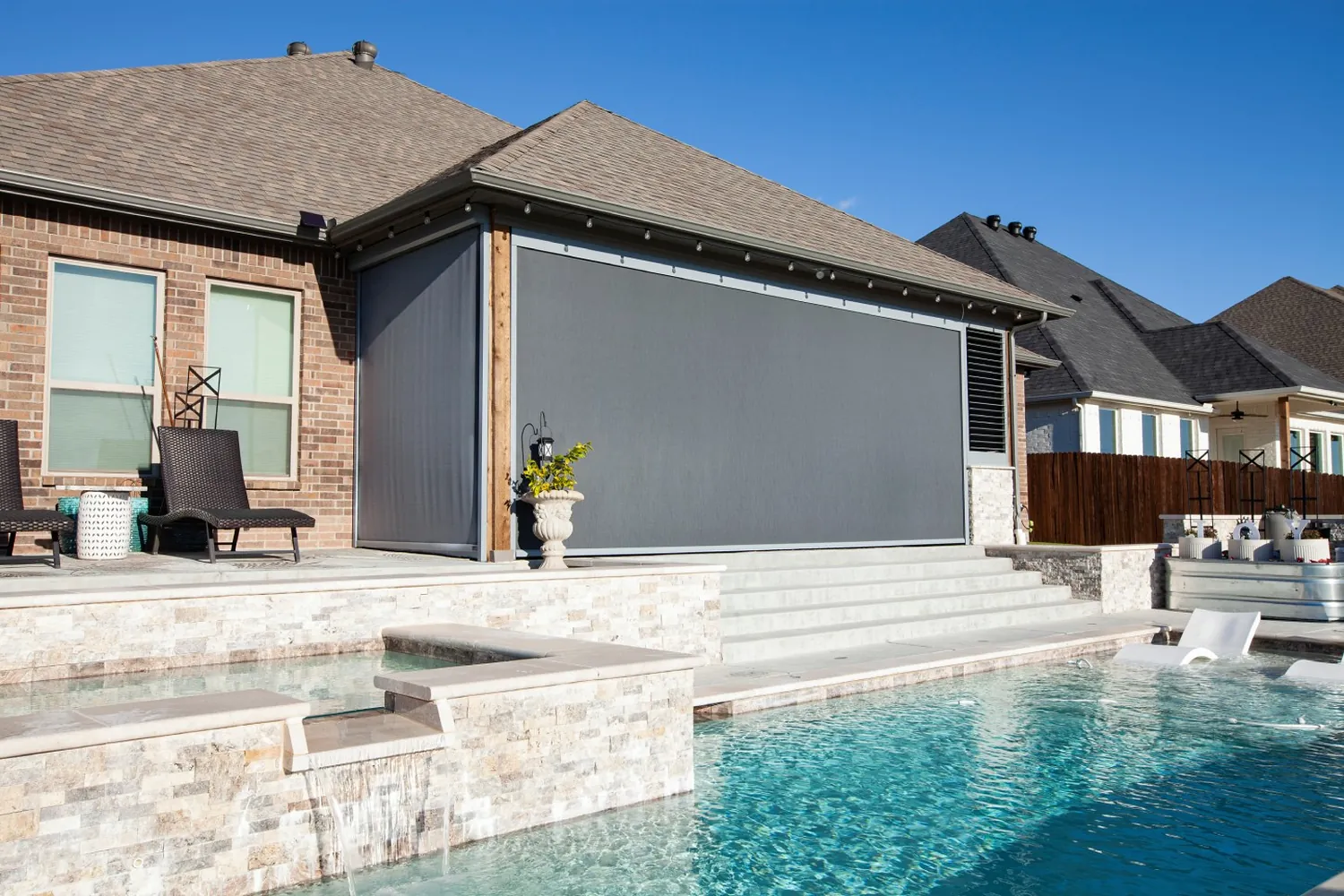
Yes, many DFW homeowners associations may require architectural approval before exterior solar screens or rolling shutters are installed, especially when the products are visible from the street. Requirements vary by association, so homeowners should review their HOA guidelines, confirm approved colors and materials, submit the requested product details, and allow time for review before scheduling installation. HOA approval is also separate from any municipal permit or historic-district requirement.
If you live in a homeowners association and plan to add exterior solar screens or rolling shutters, checking the rules before installation can save time, cost, and frustration.
There is no single HOA rule for solar screens or rolling shutters that applies to every community in Dallas-Fort Worth. Each association has its own governing documents, architectural standards, and review process. Exterior additions that change what is visible from the street may require approval from an architectural review committee.
The safest first step is to obtain your association's current architectural guidelines before selecting products or beginning custom manufacturing.
Blinds Brothers can provide product details for its motorized outdoor solar screens and rolling shutters, but homeowners should confirm and complete their own HOA approval requirements before installation. The project brief calls for this article to provide general guidance rather than represent Blinds Brothers as handling HOA submissions for the homeowner.
Architectural review is usually about maintaining a consistent exterior appearance throughout a neighborhood.
Solar screens and rolling shutters can affect the visible parts of windows, doors, patios, porches, and other exterior openings. An association may therefore want to know how the finished installation will relate to the home's architecture, nearby homes, and the overall street view.
Common review details can include:
Texas law recognizes architectural review authorities in qualifying property owners associations. Texas Property Code § 209.00505 also establishes procedures for certain denials and homeowner appeals, although the section has specific applicability limits.
The important point for DFW homeowners is that your own HOA documents still matter. Do not assume that because a neighbor installed screens or shutters, your specific project is automatically approved.
Exterior solar screens are visible additions to a home, so an HOA's architectural rules may require review before they are installed. Requirements vary by association and can depend on whether the screens face the street, their colors, how the housing is mounted, and how visible the system is when retracted.
Blinds Brothers' exterior solar screens use powder-coated aluminum housing and rails. The company states that customers can choose from nine standard housing and rail colors, with custom powder coating also available. Those options can be useful when an architectural review calls for a finish that coordinates with trim, brick, stone, or other home aesthetics.
Solar screens can also provide practical benefits beyond appearance. Depending on the fabric selected, exterior shades can reduce direct sun exposure, heat gain, glare, and UV exposure while preserving natural light and outward visibility. This can help protect furniture and floors and may reduce cooling demand around heavily exposed windows.
For HOA purposes, however, energy efficiency does not automatically eliminate architectural review.
Homeowners should not assume so.
Texas Property Code § 202.010 limits how property owners associations may restrict a qualifying "solar energy device." The statute uses the definition in Texas Tax Code § 171.107, which describes systems designed primarily to provide heating, cooling, electrical power, or mechanical power by collecting and transferring solar-generated energy.
That law is commonly relevant to solar panels and related energy-producing equipment.
Ordinary exterior solar screens work differently. They provide shade and solar protection rather than collecting solar energy to produce power or transfer it as usable energy. Based on the statutory definition, homeowners should not assume that the special protections for qualifying solar energy devices automatically apply to solar screens.
If a dispute turns on Texas law rather than ordinary HOA guidelines, consult the association, the applicable governing documents, or a qualified Texas attorney.
They may, particularly because rolling shutters include exterior components that remain visible around the opening.
Blinds Brothers' rolling shutters use housings, side rails, and aluminum slats, so color and placement can have a noticeable effect on curb appeal. The company's six standard shutter slat colors are white, cream, light beige, light gray, dark beige, and bronze.
Rolling shutters provide benefits such as privacy, security, solar protection, heat and glare control, and storm protection. They can also be motorized and controlled through wall switches, radio remotes, or compatible home automation.
Those functional benefits do not necessarily replace HOA review. If an architectural review committee regulates exterior changes, it may still evaluate the installation's dimensions, finish, visibility, or relationship to the home's style.
This is why selecting a color that blends seamlessly with existing trim or another permanent exterior material can make sense in its own right, even before HOA requirements enter the discussion.
Start with your association's actual application requirements rather than guessing.
If the board or architectural review committee asks for product specifications, provide clear information about what will be installed. A strong submission may include:
Do not rely on a product photo alone if your HOA asks for technical details. Conversely, do not assume that every HOA requires the same type of specification sheet.
For comparison, municipal historic-preservation applications in Dallas can require photographs, drawings, material specifications, cut sheets, colors, and product information for exterior work. That does not make the city process identical to an HOA application, but it illustrates why complete project details can make architectural review clearer.
Color is one of the easiest details to resolve before ordering and one of the most inconvenient to change after custom manufacturing.
Some associations use architectural standards intended to maintain a uniform appearance on street-facing elevations. Depending on the individual community, those rules may address colors, reflective materials, visible hardware, exterior-facing window treatments, or other design details.
Do not assume that requirements such as a white exterior-facing liner, a ban on reflective materials, or a particular approved color apply to every HOA. Those are association-specific rules that must be confirmed in the governing documents.
Blinds Brothers' solar screen housing and rail options, including custom powder coating, give homeowners flexibility when matching existing exterior finishes. Rolling shutter colors are similarly concentrated in neutral tones designed to coordinate with common DFW home styles.
Looking at samples against the home in natural light is useful because brick, stone, trim, and powder-coated materials can look different in morning light than they do under intense afternoon sun.
Interior window coverings are a different category from exterior solar screens and shutters.
Products such as faux wood blinds, durable faux wood products, interior shades, and other window treatments are installed inside the room. They can help manage light, privacy, glare, and daily use in living rooms, bedrooms, and other spaces.
Interior products are often less relevant to exterior architectural review, but association rules can still vary. Condominiums, townhomes, or communities with strict appearance standards may regulate what is visible through windows from the street.
For example, an HOA might have standards related to exterior-facing colors even when the window treatment itself is indoors. Check the governing documents before assuming an interior product is outside the association's authority.
The same principle applies to motorized shades, including treatments for hard-to-reach windows. Product convenience and professional installation do not determine whether approval is required. The association's actual rules do.
HOA approval does not necessarily mean the project has satisfied city requirements, and a city approval does not automatically satisfy an HOA.
A building permit, zoning approval, or historic-preservation review is a municipal process. Architectural review by a homeowners association is private-community governance.
That distinction matters for properties in historic or specially regulated districts.
In Dallas, a Certificate of Appropriateness is required before exterior work begins on designated City of Dallas Landmarks or structures in Landmark districts. The city explicitly notes that a Certificate of Appropriateness does not replace a separate building permit when one is required.
Fort Worth similarly requires a Certificate of Appropriateness for exterior alterations to designated historic properties, and exterior changes can include windows, doors, porches, and related structures.
If your own home is in a Landmark District, historic district, conservation area, or another specially regulated location, check municipal requirements separately from HOA approval.
Rolling shutters can provide meaningful storm protection, security, and protection for windows and doors. Blinds Brothers markets its rolling shutters for storm protection and offers systems constructed for demanding exterior applications.
However, do not assume that calling a product hurricane protection overrides an HOA's review process or local building requirements.
DFW is not governed by one universal HOA rule for hurricane shutters. If a project must meet a particular wind, construction, or safety standard, confirm the applicable building code and product specifications before installation.
HOA rules for hurricane protection systems, including rolling shutters, can vary by community. Homeowners should review their association's governing documents and architectural guidelines to understand any applicable requirements or restrictions before installation.
During hurricane season or other severe-weather planning, it is also important to verify HOA requirements, local regulations, product specifications, and installation details separately.
There is no reliable universal answer.
Some HOA boards or architectural committees review applications regularly, while others follow scheduled meetings or have specific submission deadlines. The time required for approval may also depend on the completeness of your application and whether additional documentation is needed.
Build lead time into the process rather than scheduling installation immediately after submitting your application.
Texas Property Code § 209.00505 does establish certain timelines after a qualifying architectural-review denial. For associations covered by the statute, a denial notice must explain the basis for denial and inform the owner about the right to request a hearing, and the board must hold that hearing within the statutory timeframe after receiving the request.
That is different from saying every initial HOA application must be approved within a month.
Before ordering exterior screens or shutters, use this process:
A well-documented process can also help when selling the property later. That does not mean solar screens or shutters automatically increase property values or resale value, but keeping exterior improvements compliant and documented can reduce questions about whether work was authorized.
Once the architectural requirements are clear, product selection can focus on how you actually use the home.
Exterior solar screens are useful when the main goals are shade, reduced heat gain, glare control, natural light, outward visibility, and energy efficiency. They can be especially useful on windows that receive strong afternoon or morning light.
Rolling shutters offer a different set of benefits, including full privacy, security, protection, motorized control, and the ability to close off the opening completely.
The perfect fit depends on the room, window or door dimensions, desired protection, visibility, exterior style, and budget. Custom products also need accurate measurements and professional installation so the complete system works with the structure.
HOA approval does not have to make a solar screen or rolling shutter project complicated. The easiest path is to understand the rules before custom products are ordered.
Request the architectural guidelines early, identify the colors and product details the board wants to see, submit complete documentation, and allow enough time for review. Then check separately for any municipal requirements that apply to your property.
Once those details are clear, Blinds Brothers can help you explore exterior solar screens or rolling shutters designed around your windows, doors, sun exposure, style, protection needs, and daily use.
Call (817) 502-6200 or request a free estimate to discuss your project.
No universal rule applies to every HOA. Many associations review visible exterior changes, but homeowners should check their own governing documents and architectural guidelines before installation.
They may. Because rolling shutters include visible exterior housings, rails, and slats, they may fall under architectural review requirements for exterior modifications.
Do not assume they are. Texas Property Code § 202.010 covers qualifying solar energy devices using a statutory definition tied to collecting and transferring solar-generated energy. Ordinary shading screens function differently from solar panels and other qualifying solar-energy equipment.
Follow your association's application. Useful information can include product specifications, dimensions, colors, materials, photographs, installation locations, and manufacturer information.
An association's architectural documents may regulate visible colors and finishes. Blinds Brothers offers multiple standard colors and custom powder-coating options for solar screen housings and rails, which can help homeowners work within aesthetic requirements.
No. HOA architectural approval and municipal permits or preservation approvals are separate processes. Dallas explicitly states that its historic Certificate of Appropriateness does not replace a building permit when one is required.
Homeowners should plan to obtain and submit any required HOA approval themselves unless Blinds Brothers specifically confirms otherwise for their project.