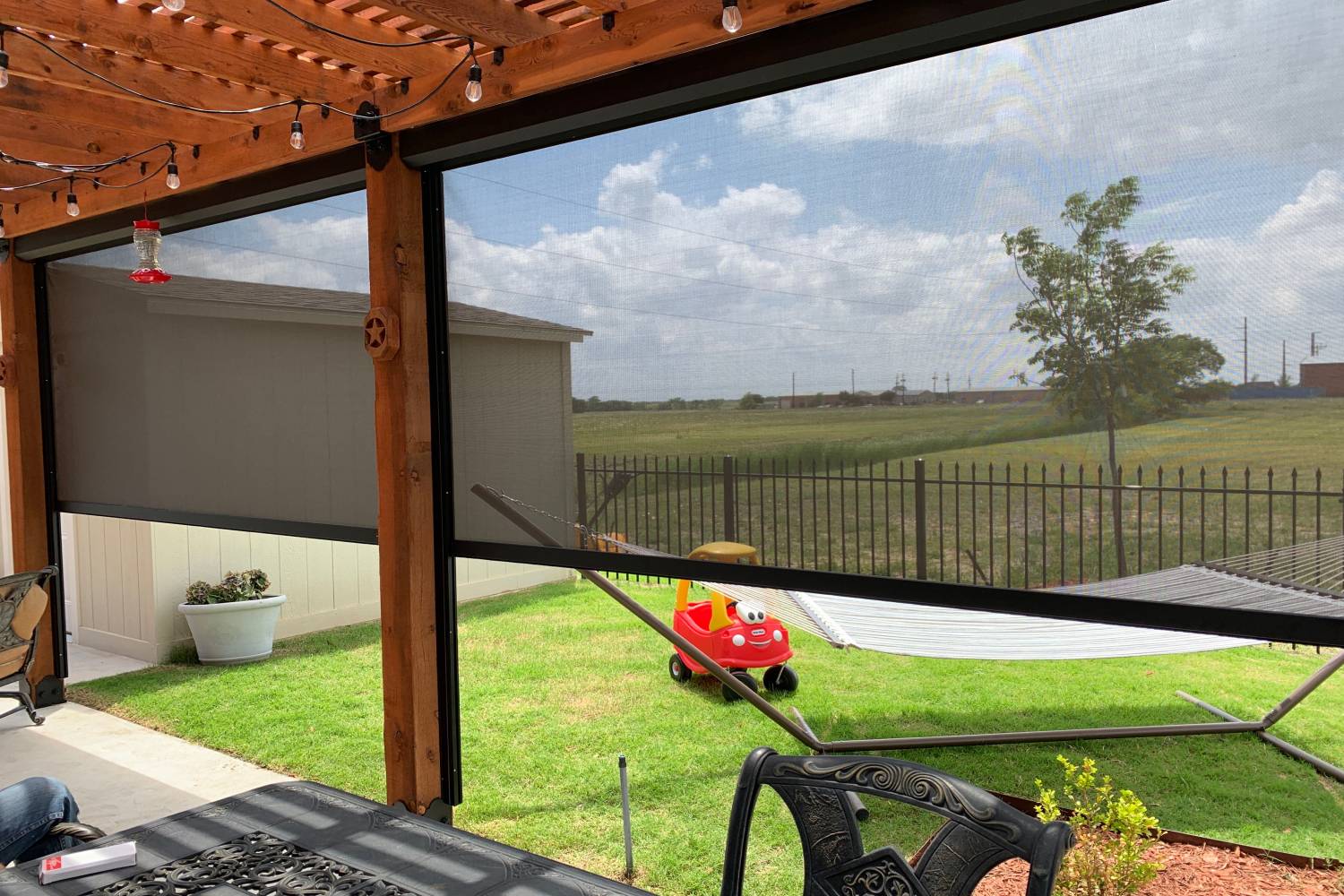
Screen openness refers to how much light and air pass through a solar screen. An 80% screen blocks more sun and glare, while 90% and 95% options allow more visibility and airflow with slightly less sun reduction.
Screen openness refers to how much space exists between the fibers of a solar screen fabric. That spacing determines how much sunlight, heat, and visibility pass through the screen. A lower openness percentage means a tighter weave that blocks more sun and glare, while a higher openness allows more light and visibility to come through.
This measurement plays a major role in how a solar screen performs. Openness affects how bright a room feels, how much heat is reduced, and how clear the view remains from inside the home. It also influences privacy levels during the day, especially when the sun is shining directly on the screen.
Understanding screen openness helps homeowners make more informed decisions about comfort and performance. Rather than focusing only on appearance, openness explains why two screens that look similar can behave very differently once installed.
Choosing the right openness is all about balance. Each option filters sunlight differently, which changes how a room feels throughout the day.
Screen openness influences:
There’s no one-size-fits-all choice. The right option depends on how much sun the window receives and how the space is used.
An 80% openness screen has a tighter weave, which means it blocks more sunlight before it reaches your windows.
This option is ideal for:
80% screens significantly reduce glare and help keep interior spaces cooler, though they slightly soften the view compared to more open options.
90% openness is one of the most popular choices because it offers a strong balance between performance and appearance.
Homeowners often choose this option for:
This openness level reduces glare while maintaining a clearer view outside and a brighter interior feel.
A 95% openness screen has a looser weave, allowing more natural light and airflow through the fabric.
This option works well for:
While it doesn’t block as much sun as lower openness screens, it still provides UV protection and daytime privacy.
Selecting the right screen openness comes down to how sunlight interacts with your home throughout the day. The direction your windows face, the intensity of direct sun, and how each room is used all play a role in determining the best fit. A space that gets strong afternoon sun may benefit from a tighter weave, while shaded areas often work better with a more open screen that preserves natural light.
Many homes use more than one openness level to get the best results. It’s common to install screens with higher sun protection on one side of the house and lighter filtering on another. This approach allows you to control glare and heat where it matters most without over-darkening areas that don’t need it.
Screen openness can be difficult to visualize without seeing it in real conditions. Light levels, exterior paint colors, and nearby landscaping all influence how a screen looks once it’s installed. What feels slightly dark on one home may appear perfectly balanced on another.
Viewing screen samples in person makes it easier to understand how each openness level affects visibility, brightness, and comfort. It also helps set realistic expectations for how the screen will perform throughout the day. An in-person consultation removes the guesswork and ensures the final choice feels right once the screens are in place.
Blinds Brothers helps homeowners select solar screen solutions in Dallas-Fort Worth, TX, based on real-world conditions, not just percentages.
Our team evaluates sun exposure, window placement, and comfort goals to recommend the right screen openness for each space.
Schedule a free estimate to explore your options and find the solar screen setup that works best for your home.
.webp)